
Wildflower meadow sowing and maintenance for Newland Homes, supporting biodiversity on new build developments
What we did and what comes next
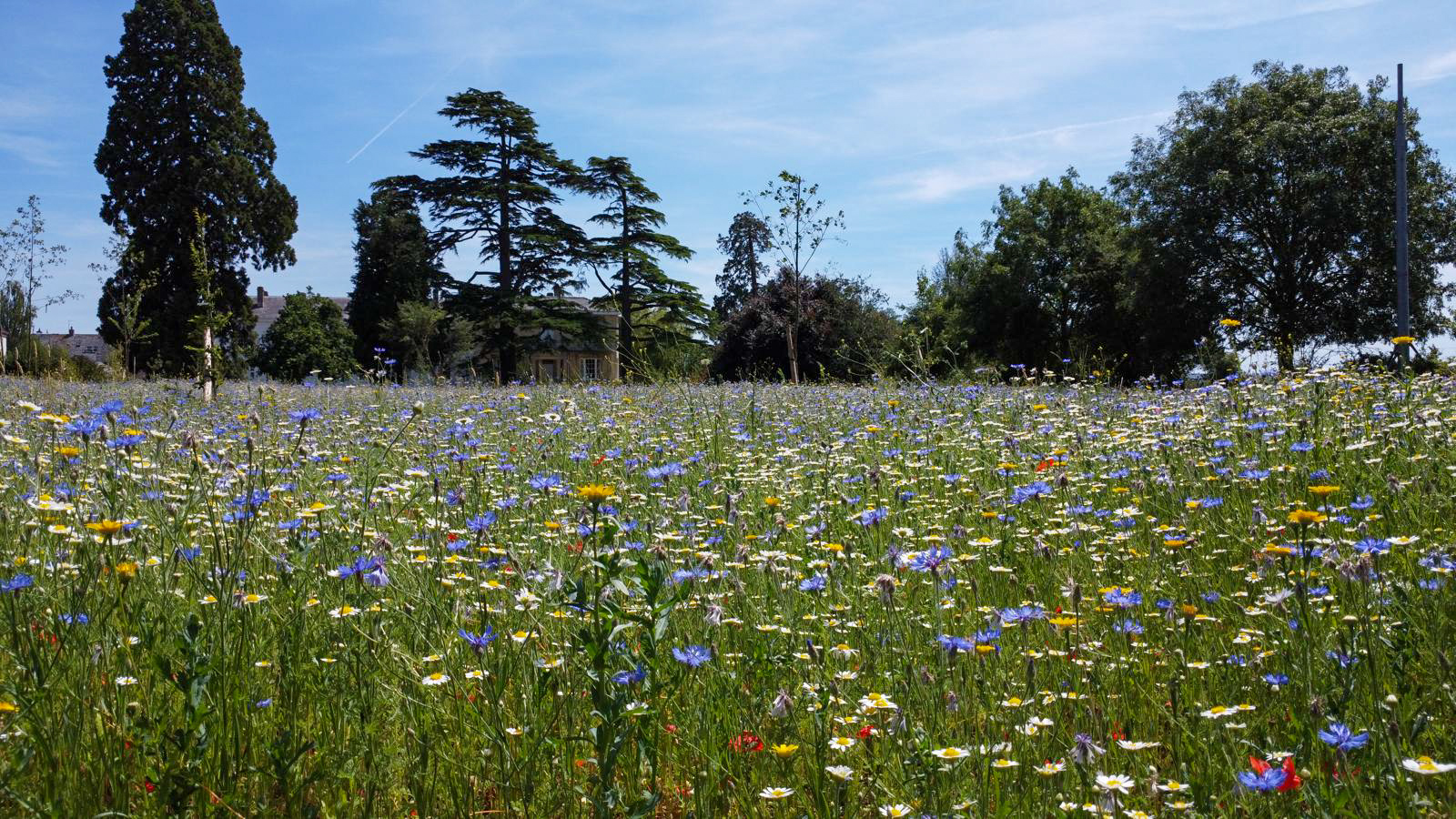
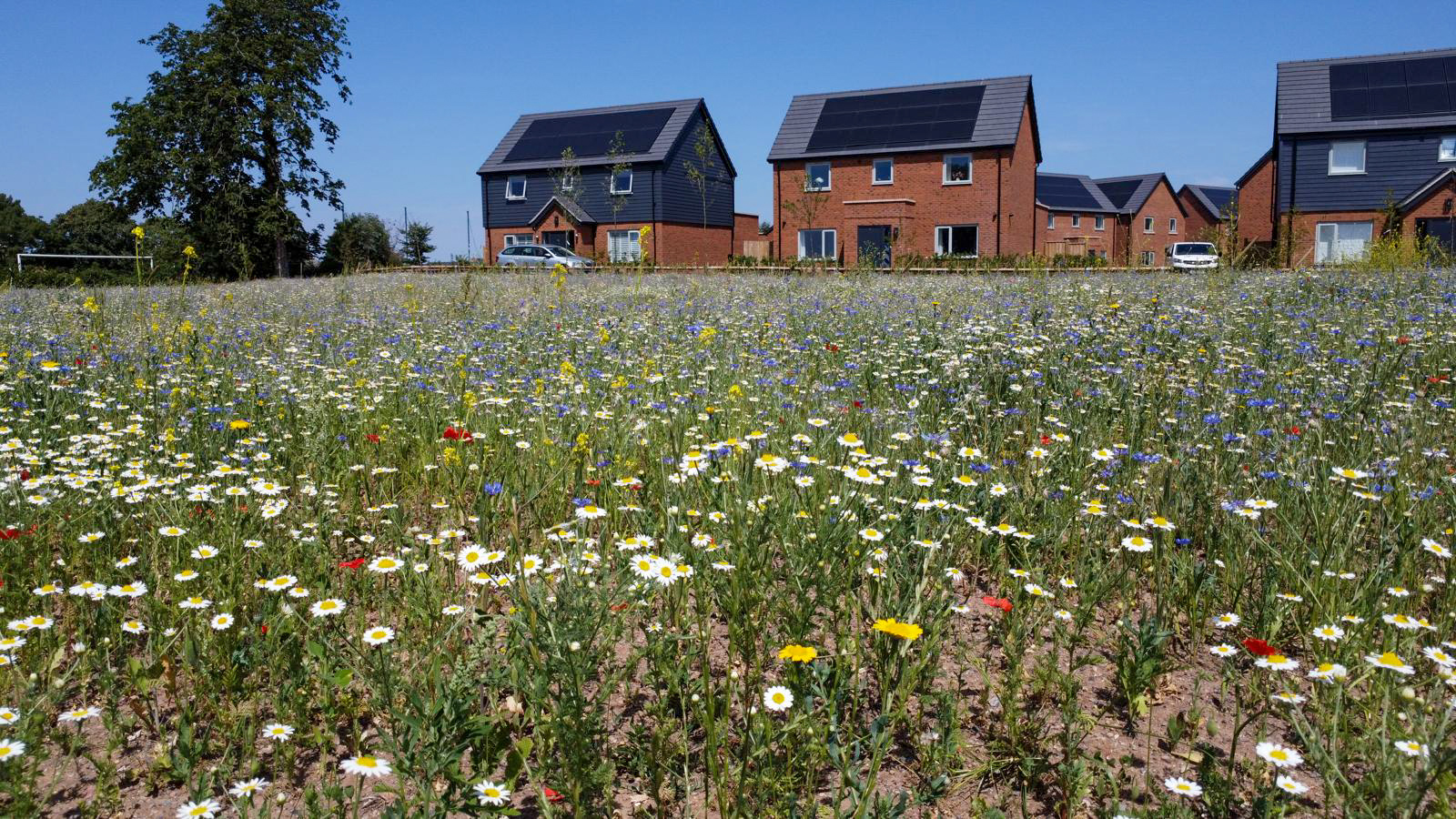
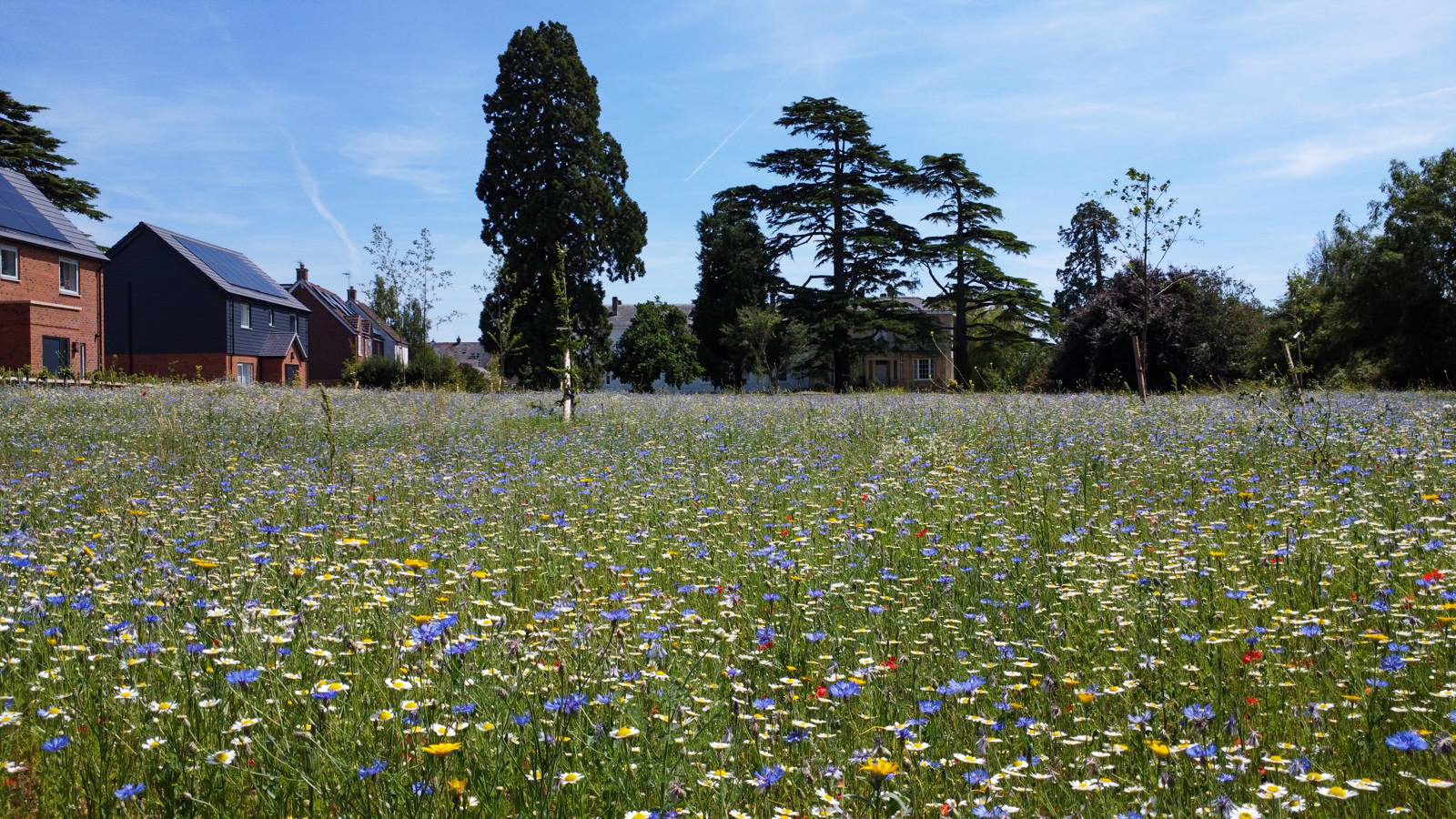
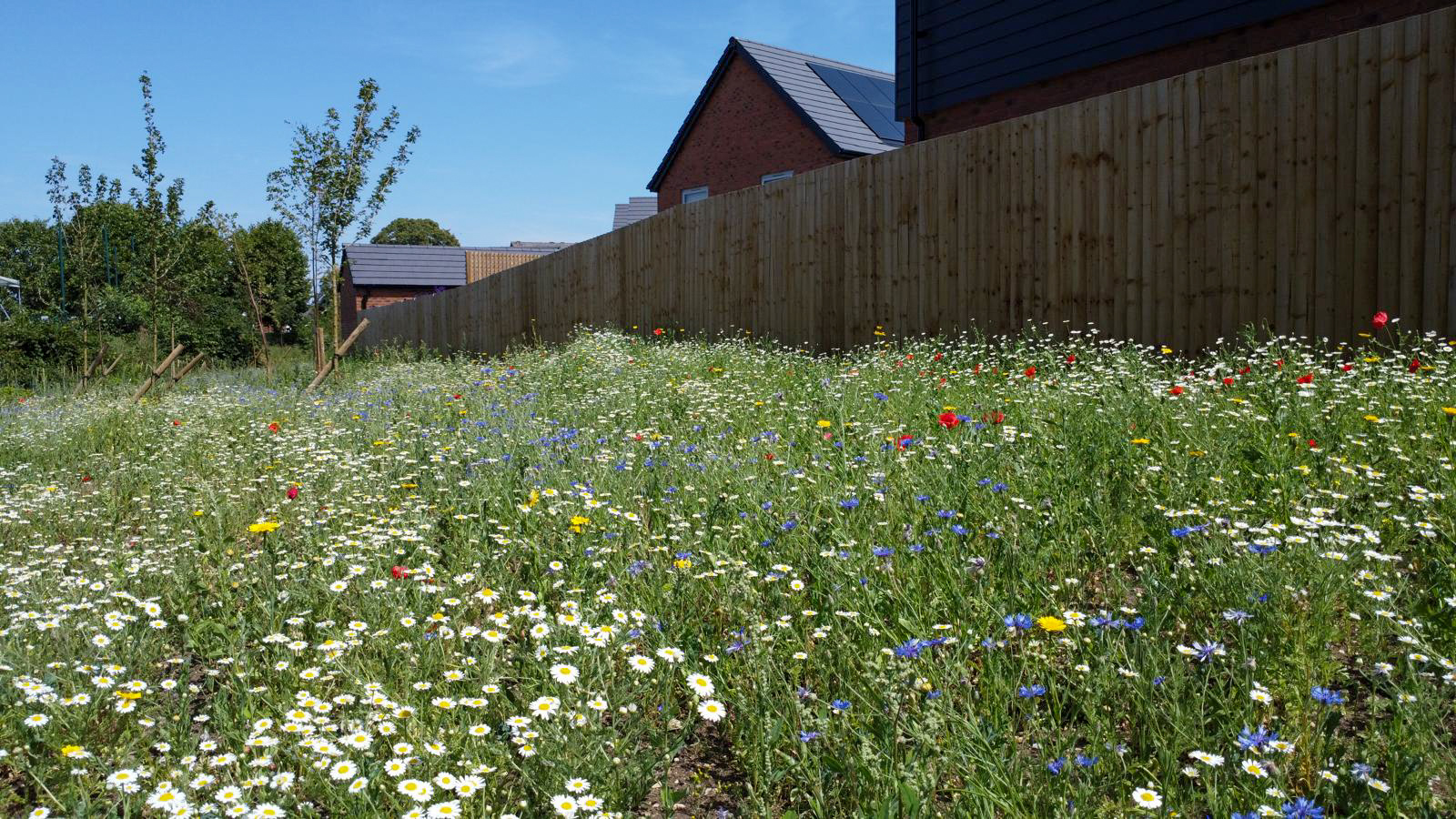
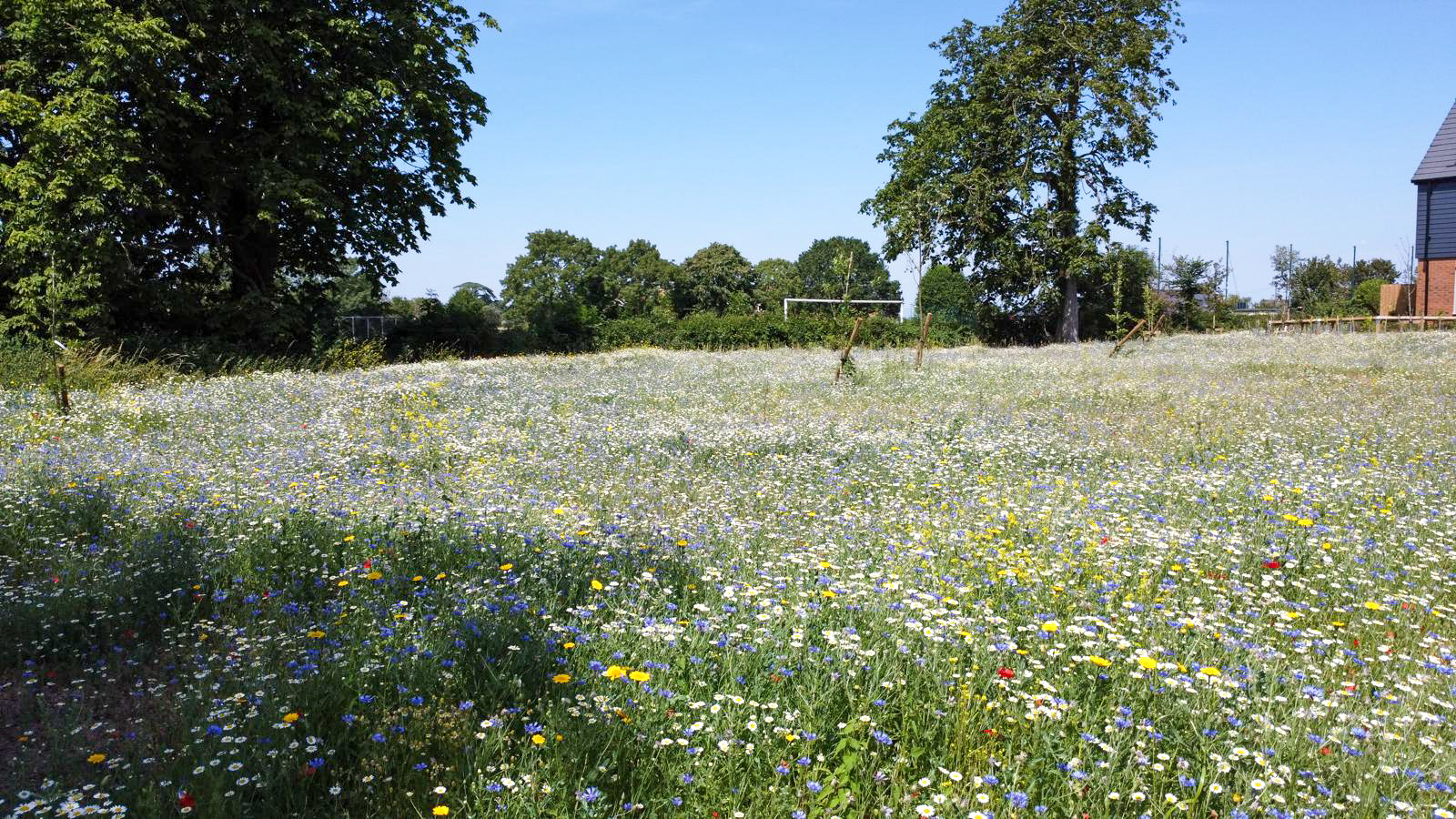
The meadow was sown in May using a carefully selected wildflower seed mix suited to the site's conditions. It's looking brilliant already, though as with all new wildflower meadows, there are a few sparse patches here and there which is completely normal at this stage of establishment.
Come September, we'll cut the meadow, remove the arisings and allow it to drop its seed back into the ground. That's where the magic really happens. The following year it will come back thicker, more varied and even more spectacular. Wildflower meadows genuinely improve with age and the right management, which is why having an experienced contractor overseeing the ongoing maintenance makes such a difference. You can read more about best practice wildflower meadow management from Plantlife's managing meadows guide.
Why developers are choosing wildflower meadows
Wildflower meadows have seen a significant rise in popularity on new build developments in recent years and it's not hard to see why.
Since the introduction of Biodiversity Net Gain (BNG) legislation, new developments in England are required to deliver a 10% increase in biodiversity per site, which must be maintained for a minimum of 30 years. Wildflower meadows are one of the most effective and cost efficient ways to meet those requirements.
According to Royal Botanic Gardens Kew, the UK has lost 97% of its wildflower meadows since the 1930s, making them one of the rarest and most threatened habitats in the country. Wildflower meadows represent a crucial opportunity for developers to restore what was once there and to leave a lasting positive legacy on the land they develop.
Beyond the legislation, the benefits speak for themselves. Wildflower meadows support a diverse range of native plants and create vital habitats for pollinators such as bees, butterflies and other insects, which in turn attract birds and small mammals. They also help improve soil health and reduce water runoff, making them particularly useful in developments looking to meet sustainability and water management targets. The RSPB's biodiversity net gain guide is a useful resource for understanding how wildflower meadows contribute to BNG targets.
And from a practical perspective, wildflower meadows are cheaper to maintain than regularly cut amenity grass, which is labour intensive and provides little benefit to wildlife. Once established, they typically only require one or two cuts per year, making them a genuinely smart long term investment for developers and estate managers alike.
The value of attractive, wildlife rich green spaces is also reflected in property prices, with the ONS estimating that green and blue space adds £2,813 to the price of an average house in the UK. Good for the environment, good for residents, and good for the development itself.
Getting it right, sowing, establishment and ongoing care
Wildflower meadows are not simply a case of scattering seed and walking away. Getting them right requires experience, careful preparation and the right ongoing management, particularly in the early years of establishment.
The establishment phase usually involves removing existing vegetation, preparing or scarifying the soil, sowing at the right rate and season, and carrying out early weed control to give the young plants the best chance to take hold. Plantlife and Earth Trust both offer excellent further reading on wildflower meadow establishment and management.
Once established, it's vital that the wildflower meadow is left uncut until late summer or early autumn, allowing a longer bloom for the wildflowers which benefits more insects. Cutting too early risks removing flowers before they've had the chance to set seed, which is why timing and expertise are everything.
That's exactly what Greenfields provides. As a team with over 30 years of experience in grounds maintenance and habitat management, we understand the importance of getting both the initial sowing and the long term management right. This site for Newland Homes is a great example, sown in May, already thriving, and on track to be even better next year.
If you're a developer, contractor or estate manager looking to incorporate wildflower meadows into your next project, or looking for an experienced team to manage an existing meadow, we'd love to talk.
📞 01452 790190
info@greenfieldsltd.co.uk
www.greenfieldsltd.co.uk
.png)
Related Projects

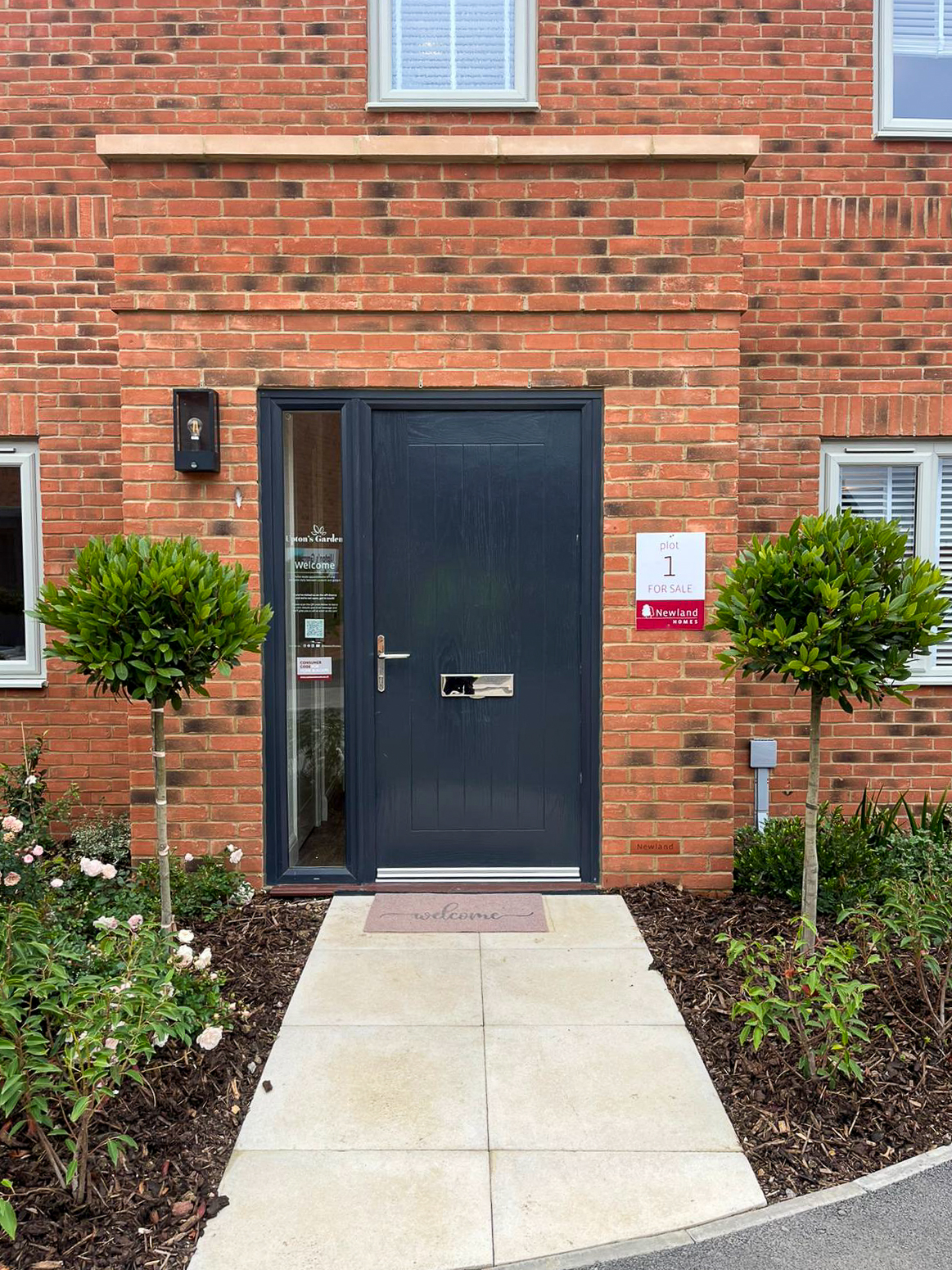
Landscaping and planting at Upton's Garden, Whitminster
.jpg)